
Construction weather report: see a real weather site report

A weather report turns measurements into decisions your site can act on, and into the record you need when a delay is questioned or you are making a weather chart for your construction site. Here is: what to record, how to build one, and a real 24-hour report from one of our station on a working site.

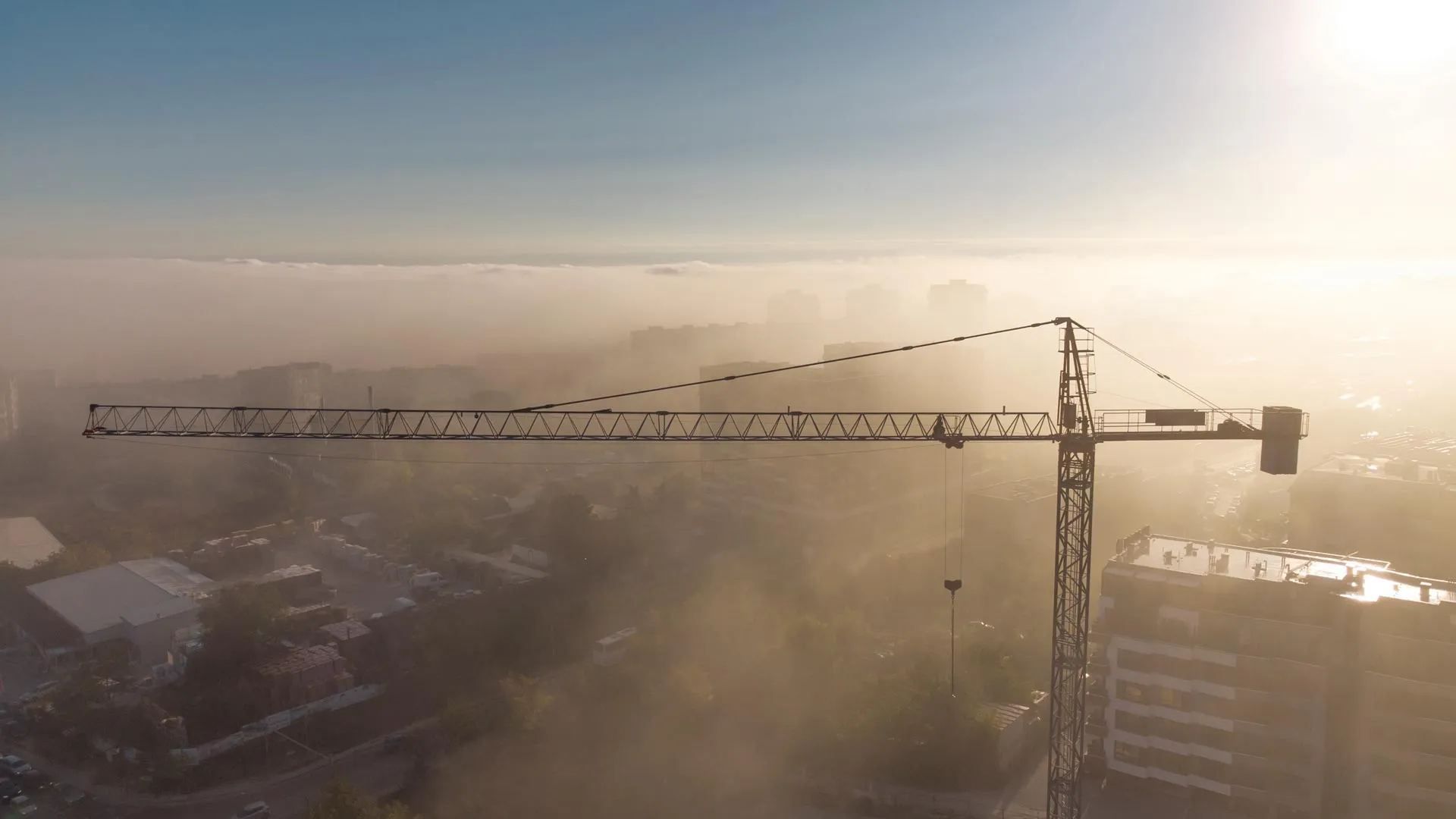
Tower cranes over a construction site with clear skies and dew in the air

What is a construction weather chart?

A construction weather chart is a daily record linking weather conditions to the activitiesthey affected. A forecast tells you what might happen. A weather chart records what did happen, and what it stopped - which is what a delay claim, a safety review or a programme revision actually needs.

It is narrower than a site diary, which covers everything that happened on site, and more detailed on weather than a daily log. Many contractors keep the weather chart as an appendix to the site diary.

What a weather chart should record

Keep it short. A chart nobody fills in is worth nothing. Eight columns and a weekly signatureis enough for most projects.

Column
What goes in it
Why it matters
Date
The working day
Anchors everything to the programme
Air temperature
Measured on site
Concrete curing, worker safety
Rainfall
Total, plus intensity
Earthworks, paving, excavation
Wind speed and gust
Sustained and peak
Lifting, working at height
Humidity
Percentage
Drying and curing times
Activity impact
What stopped, slowed or proceeded
Connects weather to programme
Hours lost
The number
What a claim rests on
Notes and signature
Context, and who recorded it
Credibility if challenged

Weather Chart: A worked example

The is an example of how a week of a real weather chart could look like

Column
Temp C
Rain (mm)
Wind (km/h)
Activity impact
Notes
Mon 5 May
17
0
10
Poured concrete
Ideal conditions
Tue 6 May
15
5
20
Limited excavation
Early morning rain
Wed 7 May
14
10
35
Crane work halted
Wind warning issued
Thu 8 May
12
0
18
Resumed facade work
All clear
Fri 9 May
18
2
12
Paint touch-ups only
Minor drizzle

Why ten minutes matters for a weather chart

Three millimetres of rain fell across four hours. A regional station would report a daily total and tell you nothing about when. This record shows which hours were workable and which were not - the difference between a claim you can evidence and one you cannot.

Timestamp
Precipitation (mm)
What it tells you
10:00
0.25
Rain begins
11:00
2.00
Heaviest hour
12:00
0.25
Easing
13:00
0.50
Final shower
Send me the report

How to build a weather chart for your site

1. Identify the weather-sensitiveactivities on your programme. Not every task stops when the weather turns, and you only need to monitor the ones that do.

2. Set your time frame. Most site managers run a rolling seven-day view updated each morning, with a longer view for seasonal planning.

3. Choose your data sources. A forecast for the outlook, on-site measurement for what actually happened. Do not rely on one.

4. Pick your parameters. Temperature, rainfall, wind speed and gust, humidity. Add visibility and lightning if they affect your operations.

5. Choose the format. A spreadsheet with colour coding works well. Green for proceed, amber for caution, red forstop.

6. Update and share it daily. Two minutes at the morning briefing. A chart in somebody's inbox is not a chart.

Which activities are weather-sensitive?

Flag these inyour programme, so that when a delay happens you already know what was on thecritical path that day.

Earthworks, excavation and trenching
Concrete pouring and curing
Steel erection
Roofing and cladding
Asphalt paving
Exterior painting and sealing
Scaffolding and lifting operations
Send me the report

Which readings matter, and who decides

There are two different questions here, and mixing them up is where weather claims gowrong. Whether conditions are unsafe is a technical question, answered by yourlift plan, the manufacturer's limits and the applicable standards.

Whether a day is claimable is a contractual question, answered by your contract.

We can help with the first by measuring accurately. We cannot answer the second foryou, and neither can any template you download.

Wind above 40 km/h. Crane and lifting operations typically stop
Rainfall above 10 mm per hour. Excavation, paving and earthworks usually become unworkable.
More than two hours of stoppage in a day. Commonly counts as a partial weather day.
Cumulative partial days. Check whether your contract lets them add up to a full day, because many do.

Agree your thresholds in writing before work starts, record them in the project executionplan, and share them with subcontractors. Arguing about the threshold after theevent is the most common reason a well-documented claim still fails.

Link to article

Three ways to use the weather report

The report arrives as a filled-in Excel file. What you do with it is up to you.

Use it as
How
Who it suits
A record
Keep it as it arrives. Everyreading is timestamped, so it stands on its own as evidence.
Anyone with a claim inprogress
A template
Clear the readings and keepthe column structure. You have a ready-made weather chart to fill in by hand.
Sites without a station yet
A working log
Add your own columns foractivity impact, hours lost and notes, then sign it off weekly.
Site managers documenting asthey go

Most contractors start with the second, then move to the third once they see howmuch of it can be filled in automatically.

Send me the report

Turning the chart into a defensible claim

There are two different questions here, and mixing them up is where weather claims gowrong. Whether conditions are unsafe is a technical question, answered by yourlift plan, the manufacturer's limits and the applicable standards.

1. Baseline the programme first, sothere is a reference point for what counts as a delay.

2. Record actuals, not forecasts. Aforecast proves nothing after the event.

3. Log what the weather stopped, notjust what the weather was.

4. Note the hours lost. Partial daysoften accumulate under the contract.

5. Issue the delay notice inside thecontractual window, frequently seven days or less.

6. Keep the record after completion.Disputes surface long after practical completion.

What contractors use our weather report for?

Once a station is on site, it records the conditions your programme actually ran under. That record answers three different questions.

Evidencing weather delays

Timestamped measurements from the site itself, rather than a forecast or a reading from an airport thirty kilometres away.

Planning weather-sensitive work

Earthworks, concrete pours and curing, steel erection, roofing, paving, painting, scaffolding and lifting.

Reviewing after the fact

Comparing what was forecast against what happened, so the next programme carries realistic contingency.

Filling it in by hand, or letting the station do it

There are two different questions here, and mixing them up is where weather claims gowrong. Whether conditions are unsafe is a technical question, answered by yourlift plan, the manufacturer's limits and the applicable standards.

Use it as
By Hand
With a station on site
Who records it the readings
Someone, every day, on a busy site
Automatic, every ten minutes
Source
Nearest official station or a forecast
Your own site
Resolution
Daily, sometimes hourly
Every ten minutes
Gaps
The first thing challenged in a dispute
None
Old data
Search back through you files
Export any date range you select
Gaps
Free and somebody's timeevery day
Subscription
Send me the report
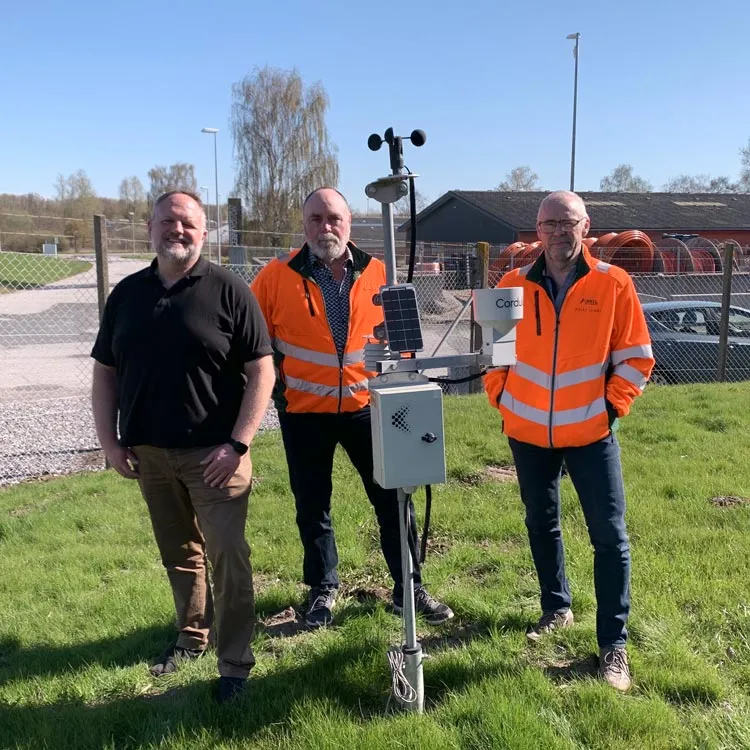
Cordulus site weather station with sensors mounted on pole at a construction site with equipment in background.

Where our data comes from?

A solar-poweredweather station built for construction sites, with a SIM card inside. Itinstalls on any of your sites in about ten minutes, with no mains power and no Wi-Fi needed.

It records continuously from the day it is switched on, and youcan export Excel or CSV for any date range.

How Arkil moved from gut feeling to facts

Three or four sentences from theexisting Arkil case study, with a link to the full article.

Read the case study

Want to see a real weather report?

Get our weather repport from a real cordulus site weather station with hyperlocal weather readings from a real construction site.

Close up shot of a concrete surface

Frequently Asked Questions

Get answers to you questions here about Cordulus Site Subscription and more.

What does construction site cost?

It is a yearly subscription that includes the weather station, maintenance, app access, and support. Request a quote on our pricing page and sales will contact you with the current rates

Can I move the station between sites?

Yes. It installs in about ten minutes and has GPS tracking, so you can move it when a project finishes.

Do I need Wi-Fi or mains power for the weather station?

Neither. The station is solar-powered and sends data over the mobile network using a built-in SIM card.

Can I use the report as a template?

Yes. If all parties agree that the format and column structure is sufficient, add all the necessary notes all parties need, clear old the readings, and have a weather chart ready to fill in by hand.

Who is responsible for recording the weather on site?

Normally the site manager or works supervisor, as part of the daily record. The contract sometimes names the responsible party explicitly.

How long should weather records be kept?

At least as long as the contractual liability period, and usually longer. Disputes surface well after practical completion.

At what temperature should you stop pouring concrete?

It depends on the mix and the standard you are working to. What matters for documentation is that you can show the temperature at the time of the pour, measured on site.

What wind speed stops crane work?

Commonly around 40 km/h, but it depends on the crane, the load and the manufacturer's limits. Your lift plan is the authority, not a general figure.

Is a weather record the same as a site diary?

A site diary covers everything on site. This covers the weather in far more detail, and is often attached to the diary as an appendix.

Does a forecast count as evidence?

Usually not. Contracts generally require conditions measured at or near the site.

Can I export any date range?

Yes, you can export Excel or CSV, for any period the station has been running on your construction site.

How far back does the data go?

For your own station, from the day it is installed. Ask us about historical data for your area.