How to schedule for the best weather to pour concrete

Site-specific weather data allows construction managers to schedule concrete pours during the best weather conditions, minimizing risks and ensuring proper curing for optimal concrete quality.

Bricklayers leveling freshly poured concrete during good construction weather

Why local weather data matters for concrete pours

Concrete pouring is a very sensitive process that can easily be disrupted by unforeseen or rapidly changing weather conditions. The potential consequences of getting caught off-guard during concrete pours can be extremely expensive and result in significant delays, so it's vital that you rely on accurate weather forecasts and real-time data to determine a pour's viability.

But the weather can quickly change at a local level. The wind might pick-up, temperatures can change rapidly, and unexpected rainfall can disrupt your scheduled concrete pour. While weather forecasts provide you with an overview, they often lack the ability to warn you of changes in the weather quickly enough or locally enough.

What you need is site-specific weather data, both real-time and forecasts to determine the best times to schedule pours to minimize risk.

Construction worker smoothening out newly poured concrete floor during optimal weather conditions
Newly inserted rebar in reinforced concrete

How air temperatures impact concrete quality

Concrete pouring is highly sensitive to temperature - both hot and cold extremes negatively impact the curing process and the final strength of the concrete. Pouring concrete in extreme temperatures significantly reduces its quality and structural integrity. That’s why you must carefully monitor the temperature during and after pouring.

Concrete pouring should be scheduled during parts of the day with moderate weather to avoid too high or low temperatures. Optimally scheduled concrete pours help avoid rapid drying and other issues that compromise the quality of the final product.

Laying concrete in cold weather conditions

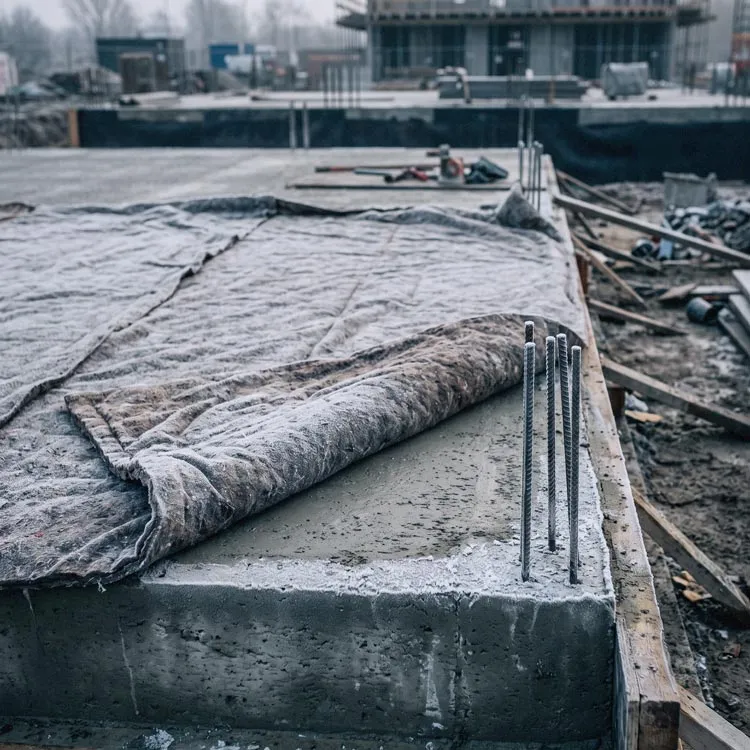
As mentioned in the previous section. Cold weather working starts earlier than most site teams expect. Some standards requires fresh concrete to be at least 5°C at delivery, and some standards requires protection against freezing until the concrete reaches 5 MPa. Neither threshold is freezing point.

Both requirements are written against conditions at your site, not conditions across the region. A forecast from twenty kilometres away is not the air temperature over your slab, and ifthe pour is questioned later, a forecast is not evidence of what actually happened.

Cordulus measures air temperature where you are laying, every 10 minutes, and keeps the record.

Read about the air temperature
Freshly poured concrete slab at a construction site partially covered with insulating blankets to protect it in cold weather, with exposed rebar rods and surrounding construction materials.
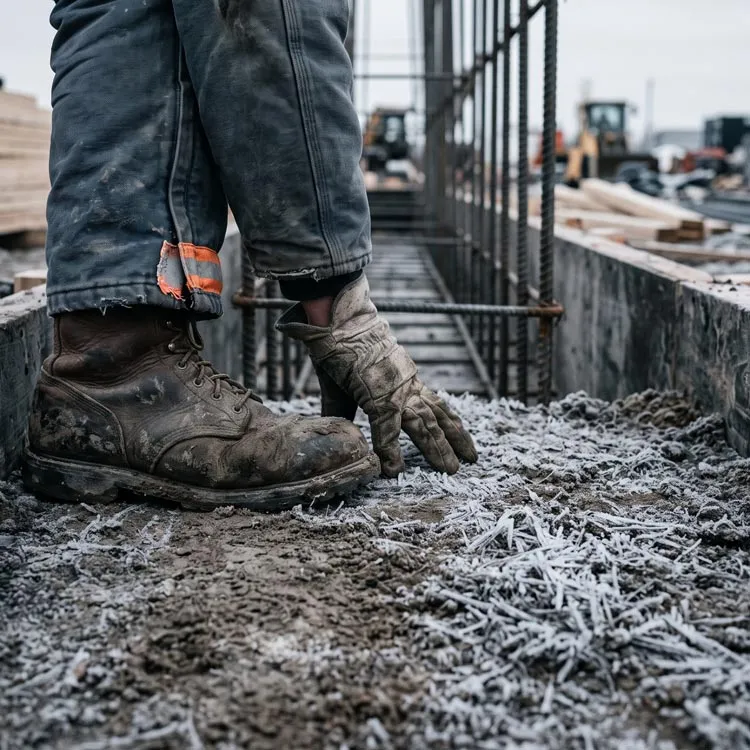
Close-up of a construction worker's boot and gloved hand on frosty, rough concrete ground with metal rebar structure at a building site.

How frozen ground affects concrete slabs

Concrete should never be laid on frozen subgrade. Ground that thaws unevenly under a fresh slab settles unevenly, and the cracking that follows appears weeks later, when the cause is hard to prove.

Air temperature will not tell you whether the ground is frozen. Soil holds cold differently, and a site can read well above 5 °C at head height with frost still sitting in the subgrade from three nights earlier.

The Cordulus station measures soil temperature alongside air temperature, so the ground you are about to lay onto is a reading rather than an assumption.

Read about the soil temperature

Prevent costly delays with accurate rain forecasts

Rain can weaken the concrete mixture during pours, resulting in cracks and structural issues, which is why accurate, site-specific weather forecasts are crucial for scheduling. Cordulus provides rain forecasts that are up to 52% more accurate than other forecasts enabling you to schedule pours with certainty.

Rain is also the condition most often argued about afterwards. The Cordulus rain gauge records intensity and duration at your site in 10-minute intervals, so your rainfall carries a timestamp.

Schedule concrete pours during optimal weather windows
Proactively protect concrete from incoming rain
Minimize costly delays
Document exactly when rain started and stopped relative to the pour

Cordulus’s hyperlocal weather forecasts and real-time data ensure your pours are perfectly timed. With our weather data, you’ll minimize delays, protect quality, and save costs.

Cement experiencing light rain, making it possible that the structural integrity might be compromised
Construction worker polishing a newly cemented floor

Managing humidity for proper concrete curing

Monitoring your site-specific humidity levels is crucial as it directly impacts evaporation during the hydration process. Improper drying can compromise the concrete's structural integrity. High humidity slows down the evaporation process, leading to delays, whereas low humidity causes the concrete to dry too quickly, leading to cracks.

You can adjust the concrete mixture's composition to account for varying levels of relative air humidity to control the evaporation rates and ensure proper curing. But that requires real-time readings as well as an accurate forecast of humidity changes during the curing process.

Cordulus provides both in one package, with readings from a weather station and a hyperlocal weather forecast that's specifically tailored to your construction site.

Assessing weather risks for the best concrete pours

While it is possible to pour concrete in suboptimal weather conditions, it might be more costly than to reschedule or delay the pour. Weather data can help you prepare for potential weather risks, helping you decide if you need to prepare protective coverings when there's a risk of rain or adjust the concrete mixture to account for the humidity levels.

It's crucial to weigh the costs of mitigation against the schedule delays that may arise from avoiding poor weather conditions. Cordulus provides you with all the data you need to make the right decisions exactly when you need to.

Cordulus rain radar showing hyperlocal rain data for a construction site